How Live Nation Turned Concerts Into a Luxury Good
By Omar Afra
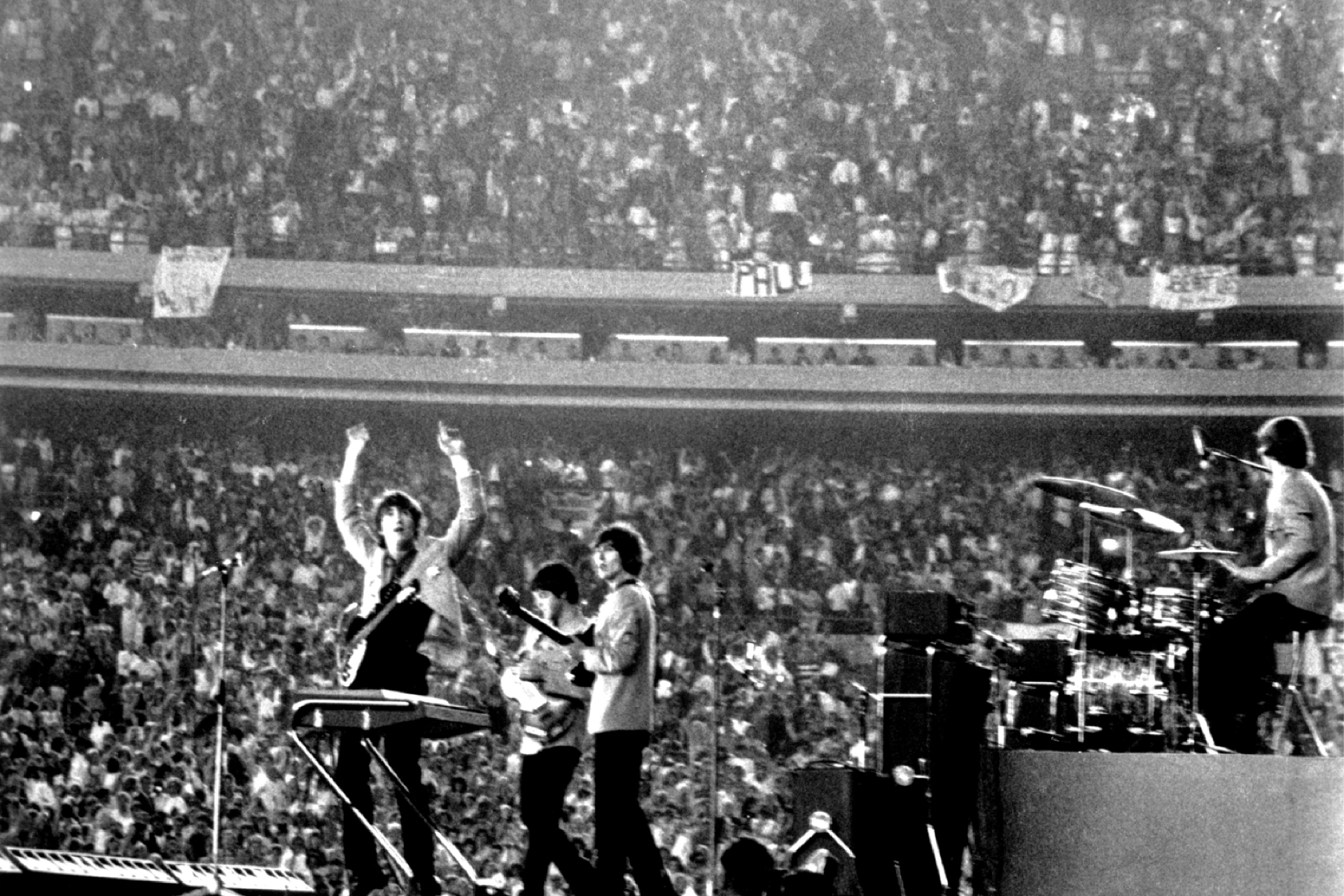
In 1965, you could see The Beatles at Shea Stadium for five dollars.
Not as a metaphor. Not in some sepia-toned fantasy about "the good old days." The actual ticket prices ranged from about $4.50 to $5.65. Adjusted for inflation, five dollars in 1965 is roughly fifty-one dollars today.
That's the honest math.
Now compare that to where we are: the average ticket price for the top 100 tours in 2024 was around $136. Not the VIP tier. Not resale. The average.
So if a Beatles ticket "should" cost about $51 in today's dollars, modern ticket prices are roughly 164% higher than inflation alone would justify. That's not organic growth. That's leverage.
And leverage doesn't appear out of nowhere. It consolidates.
In 2010, the Obama administration approved the merger between Live Nation and Ticketmaster. At the time, the Department of Justice framed it as a manageable integration — vertical efficiency, consumer benefits, oversight conditions. The idea was that combining the world's largest promoter with the dominant ticketing platform would streamline the business without distorting it.
What it created instead was a single gravitational center in live music.
Live Nation didn't just become a promoter. It became the venue operator. The ticketing platform. The sponsorship broker. The artist management arm. The routing muscle. The data warehouse. The marketing engine.
It became the stack.
And stacks don't exist to preserve nuance. They exist to optimize revenue.
Today Live Nation reports record revenues north of $22 billion annually. Its CEO, Michael Rapino, has openly stated that demand for live music remains strong and that the industry has "a lot of runway" left — a phrase that sounds harmless until you translate it. Runway means pricing power. Runway means there is still room to raise ticket prices and the market will tolerate it.
And it has.
Dynamic pricing is now normalized. Platinum tiers are standard. Service fees are layered like architectural detail. The fan experience has been financialized.
Meanwhile, mid-tier artists are doing the quiet math and realizing touring is no longer a given. Shirley Manson of Garbage has spoken candidly about how difficult touring has become for bands operating outside the mega-tier. Rising production costs. Consolidated venue access. Shrinking margins. The implication isn't hysteria — it's arithmetic.
If you are not operating at stadium scale, the system is no longer built for you.
And this is where the analogy gets uncomfortable.
In the 1980s, record labels made their real money off a handful of superstars. The rest of the catalog — brilliant, strange, culturally vital records — often sat on shelves without promotion. They existed, but they weren't prioritized. They weren't funded at scale. They were noise compared to the hits.
We are drifting toward that same paradigm in live music.
If you are Taylor Swift, Beyoncé, Bad Bunny, or any global stadium entity, you are the system's proof of concept. The infrastructure bends to accommodate you. Marketing budgets are enormous. Routing is optimized. Sponsorships flow.
If you are not, you are a variable.
And consolidated systems hate variables.
When the largest promoter in the world also controls ticketing and operates hundreds of venues globally, risk tolerance shrinks. Predictability wins. Scale wins. Mega-events win.
What doesn't win is the weird mid-level band building a regional scene. What doesn't win is the genre experiment that fills 1,500-cap rooms but doesn't trend on TikTok.
Because here's the part nobody likes to say out loud: consolidation doesn't just raise prices. It reshapes incentives.
If you're an artist now, the path to touring viability increasingly runs through algorithmic performance. Engagement metrics. Content cycles. Viral traction. You are not just a musician; you are a distribution machine.
Art has been reduced to passive entertainment because passive entertainment scales cleanly.
The middle class of music — the ecosystem of touring artists who once made modest but sustainable livings — is being compressed. Touring costs have ballooned: fuel, insurance, crew wages, staging, compliance. When you add in the structural dominance of a single vertically integrated entity, the squeeze intensifies.
Fans feel it too.
The average ticket price in 1996 for the top 100 tours was roughly $26. Today it is more than five times that. Inflation explains part of it. Consolidation explains the rest.
And when prices rise beyond inflation-adjusted baselines by more than 160%, something fundamental has shifted. Live music is no longer an accessible rite of passage. It's an event you budget for like airfare.
Luxury goods have pricing elasticity because they trade on exclusivity.
Is that what live music is supposed to be?
Scenes are not born in VIP lounges. They're born in rooms that smell like beer and cables. They're born in repetition — seeing the same band three times in six months for twenty bucks. They're born in access.
Consolidation erodes access.
As ticketing, promotion, venue control, and sponsorship converge under one corporate umbrella, the ecosystem centralizes. Decision-making concentrates. Exposure narrows.
The result is monoculture.
You see it in festival lineups that feel algorithmically optimized. You see it in routing patterns that prioritize markets with maximum yield. You see it in sponsorship activations that look interchangeable from city to city.
We are building a world where live music must justify itself at scale or not at all.
And when everything has to be stadium-sized to be viable, creativity doesn't disappear — it goes underground. It fragments. It retreats from visibility.
The industry likes to frame record profits as proof of health. But revenue concentration is not the same as ecosystem vitality.
A forest can have a few towering trees and still be dying underneath.
The merger that created this structure was not evil in intent. It was logical in business terms. But business logic, unchecked, optimizes for margin and scale — not diversity and surprise.
Live music is now being treated like infrastructure. That's efficient. It's also dangerous.
Because infrastructure rewards stability.
Art requires risk.
When the same entity controls promotion, ticketing, venue access, artist management, and the data pipelines that determine visibility, the system becomes self-reinforcing. The biggest acts get the biggest support. The middle shrinks. The bottom is left to fend for itself.
And fans adapt.
We normalize $200 tickets. We rationalize $400 nights out. We treat concerts like aspirational experiences rather than communal ones.
We don't notice that something is thinning out.
This is how live music becomes a luxury good.
Not overnight. Not dramatically. Just gradually enough that we convince ourselves it's inevitable.
There is nothing wrong with success. There is nothing wrong with scale. But when consolidation narrows the pipeline of who gets supported, who gets promoted, who gets routed, and who gets financed, culture contracts.
And once culture contracts, it rarely expands without disruption.
The irony is brutal: live music survived the collapse of physical record sales. It became the last bastion of artist income. And in protecting that revenue, we built a fortress so tall that only giants can see over it.
No plan A exists inside a monopoly-adjacent system. There is only adaptation.
Artists adapt by becoming content machines. Fans adapt by paying luxury prices. Promoters adapt by aligning with the dominant rail.
But culture does not thrive under adaptation alone.
It thrives under friction, decentralization, and access.
If we continue down this path, live music will remain profitable. It will remain spectacular. It will remain sold out.
But it will be narrower.
Less weird. Less risky. Less surprising.
And the next Beatles won't cost five dollars — or fifty-one.
They'll cost whatever the runway allows.
And the runway, motherfucker, is paved with consolidation.